The Cosmological View of Mexican Day of the Dead: A Life and Death Dialogue between Aztec Calendar and Catholic Culture

Jun 10, 2025 By

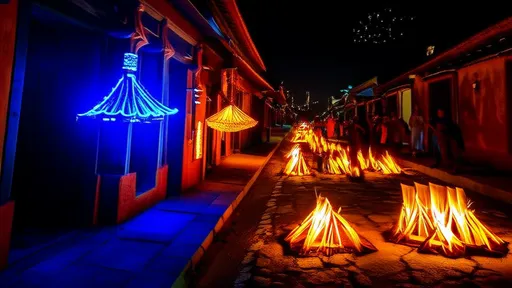
The Mexican Day of the Dead, or Día de los Muertos, is a vibrant and profound celebration that transcends mere festivity. At its core lies a rich cosmological dialogue between the ancient Aztec understanding of life and death and the Catholic traditions brought by Spanish colonizers. This unique fusion has given birth to a ritual that is both deeply spiritual and joyously communal, reflecting a worldview where the boundaries between the living and the dead blur, if only for a brief moment each year.


The Aztec Foundations: A Cyclical Understanding of Existence

To grasp the essence of the Day of the Dead, one must first delve into the Aztec cosmological vision. For the Aztecs, time was not linear but cyclical, governed by intricate calendrical systems that intertwined the sacred and the mundane. The tonalpohualli, or the 260-day ritual calendar, and the xiuhpohualli, the 365-day solar calendar, were not just tools for marking time but frameworks for understanding the universe. Death, in this worldview, was not an end but a transition—a return to the cosmic cycle.


The Aztecs believed in multiple afterlife destinations, each tied to the manner of one’s death rather than moral judgment. Warriors who died in battle, women who perished in childbirth, and those claimed by water deities each journeyed to distinct realms. This pluralistic view of the afterlife stands in stark contrast to the binary heaven-hell dichotomy of Catholicism, yet it is this very contrast that would later weave itself into the fabric of the Day of the Dead.


Catholic Syncretism: A Forced yet Fertile Encounter

With the arrival of Spanish conquistadors in the 16th century, the indigenous cosmology collided with Catholic dogma. The colonizers sought to eradicate native beliefs, imposing All Saints’ Day and All Souls’ Day—observances meant to honor the departed within a Christian framework. Yet, rather than disappearing, the Aztec traditions adapted, merging with Catholic rites to form something entirely new. The result was a syncretic tradition that retained the indigenous reverence for the dead while incorporating Catholic symbolism.


The timing of the Day of Dead—coinciding with the Catholic feasts of November 1st and 2nd—is no accident. It aligns with the Aztec month of Miccailhuitontli, dedicated to the deceased. The Spanish may have intended to overwrite native practices, but instead, they unwittingly provided a new vessel for an ancient worldview to endure. The ofrendas (altars), marigold flowers, and sugar skulls that define the celebration today are testaments to this cultural resilience.


The Living and the Dead: A Temporary Reunion

Central to the Day of the Dead is the belief that the souls of the departed return to visit their living relatives. This is not a somber occasion but a joyous reunion, filled with music, food, and laughter. The ofrendas, adorned with photographs, favorite foods, and personal mementos of the deceased, serve as both invitation and offering. Marigold petals, known as cempasúchil, guide the spirits with their vibrant color and pungent scent, while copal incense purifies the space, bridging the earthly and the divine.


This ritual underscores a fundamental difference between Western and Mesoamerican attitudes toward death. In many Western cultures, death is often feared or sanitized, hidden away in hospitals and funeral homes. For Mexicans, death is a companion, a natural part of life to be acknowledged and even celebrated. The playful depictions of skeletons—calaveras—dressed in finery or engaged in everyday activities reflect this intimacy with mortality.


A Cosmic Dialogue Continues

Today, the Day of the Dead stands as a testament to the enduring power of cultural synthesis. It is a living tradition that continues to evolve, embracing modern influences while staying rooted in ancient beliefs. UNESCO’s recognition of the celebration as an Intangible Cultural Heritage in 2008 has only amplified its global resonance, yet its heart remains unmistakably Mexican.


In a world increasingly divided by borders and ideologies, the Day of the Dead offers a profound lesson. It reminds us that death, like life, is not a solitary journey but a shared experience—one that can bring people together across time, space, and even belief systems. The Aztec and Catholic cosmologies may have arisen from vastly different worlds, but in the flickering candlelight of an ofrenda, they speak the same language: one of remembrance, love, and the unbreakable bonds between the living and the dead.


Recommend Posts
Travel

The Michelin Paradox of Thai Street Food: A Star Certified Survival Experiment for Bangkok Street Vendors

By /Jun 10, 2025

The steam rises in thick curls from the dented aluminum pot, carrying the scent of garlic, fish sauce, and slow-cooked pork belly through the humid Bangkok air. At his six-seat sidewalk stall in the Old City, 72-year-old Uncle Sanit has been perfecting his khao kha moo (braised pork leg rice) for 53 years - long before the red Michelin Guide arrived in Thailand. Now, the once-anonymous cook finds himself at the center of what locals call "the noodle stall dilemma": what happens when global culinary prestige collides with the fragile ecosystem of street food capitalism?
Travel

Social Algorithm for Istanbul Coffee Divination: Information Encryption Techniques from the Ottoman Empire

By /Jun 10, 2025

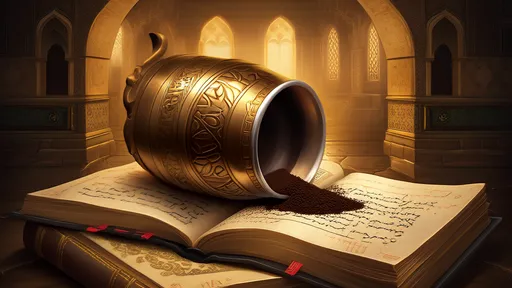
In the labyrinthine alleys of Istanbul, where the scent of roasted coffee beans mingles with the whispers of centuries past, a peculiar tradition persists. Turkish coffee fortune-telling, or tasseography, isn't merely a parlour game—it's an intricate social algorithm encoded in porcelain. What appears as whimsical pattern-reading in coffee grounds carries the cryptographic fingerprints of Ottoman-era information networks, where women traded secrets under the veil of divination.
Travel

Microbial Wars in Burgundy Vineyards in France: How Barrel Fungi Affect AOC Regulatory Revisions

By /Jun 10, 2025

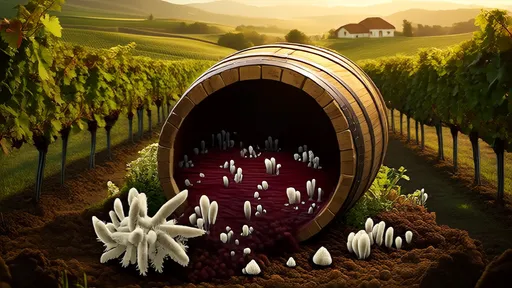
The vineyards of Burgundy, France, have long been celebrated for their terroir—the unique combination of soil, climate, and tradition that gives the region’s wines their distinctive character. But beneath the surface of this revered winemaking landscape, a microscopic battle is raging. Fungi residing in the oak barrels used for aging wine are quietly influencing not just the flavor profiles of Burgundy’s finest vintages but also the very regulations that govern their production. Recent scientific discoveries have prompted discussions about revising the Appellation d’Origine Contrôlée (AOC) rules, as researchers uncover the profound role of microbial ecosystems in shaping wine quality.
Travel

The 'bow effect' of the Flatiron Building in New York: How sharp edged architecture changes urban wind tunnel studies

By /Jun 10, 2025

The Flatiron Building, an iconic wedge-shaped structure at the intersection of Fifth Avenue and Broadway in Manhattan, has long fascinated architects, engineers, and urban planners. Its distinctive triangular form, resembling the prow of a ship, doesn’t just stand as a testament to early 20th-century architectural ambition—it also inadvertently became a case study in urban wind dynamics. The so-called "bow effect" of the Flatiron Building has reshaped how we understand the interaction between sharp-angled structures and the wind tunnels they create in dense cityscapes.
Travel

The Byzantine Code of Istanbul's Underground Water Palace: How the Reservoir Became a Political Metaphor Field

By /Jun 10, 2025

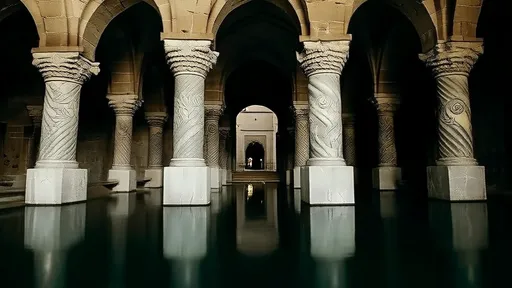
Beneath the bustling streets of modern Istanbul lies a silent witness to Byzantine intrigue – the Basilica Cistern, a subterranean cathedral of water whose shadowy columns now whisper political allegories to contemporary Turkey. This sixth-century marvel, built by Emperor Justinian to quench Constantinople's thirst, has transformed from utilitarian infrastructure into a potent symbol of power, memory, and contested narratives.
Travel

The Economics of Brazilian Carnival Floats: How Rio's Slums Reverse through Samba Schools

By /Jun 10, 2025

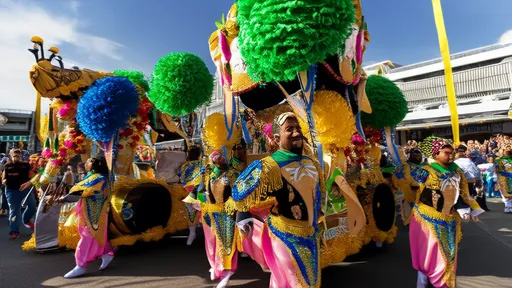
The streets of Rio de Janeiro erupt in a riot of color and sound every February as the city’s legendary Carnival takes center stage. At the heart of this spectacle are the samba schools, the cultural engines that transform the city’s most marginalized neighborhoods into vibrant hubs of creativity and economic opportunity. Behind the glittering costumes and towering floats lies a lesser-known story: how Carnival has become a lifeline for Rio’s favelas, turning poverty into pride and struggle into spectacle.
Travel

The dilemma of light pollution during India's Diwali Festival: the debate over the civilized brightness of traditional oil lamps and LEDs

By /Jun 10, 2025

The glow of millions of lamps has long been the defining feature of Diwali, India’s Festival of Lights. For centuries, the flickering flames of earthen diyas (oil lamps) symbolized the triumph of light over darkness, knowledge over ignorance. Yet in recent years, this ancient tradition has collided with modernity, as LED lights and electric decorations flood markets and homes. The result is an unintended consequence: a dramatic surge in light pollution that obscures the night sky, disrupts ecosystems, and sparks a cultural debate over how India celebrates its most beloved festival.
Travel

The Bloodline Controversy of the Spanish Running Bull Festival: How Pamplona Balance Tourism Benefits and Animal Ethics

By /Jun 10, 2025

The annual Running of the Bulls in Pamplona, Spain, is a spectacle that draws thousands of adrenaline-seeking tourists each July. Yet beneath the thunderous hooves and roaring crowds lies a simmering debate about tradition, tourism, and the ethics of animal treatment. For centuries, the festival has been a cornerstone of Spanish culture, but modern scrutiny forces Pamplona to confront an uncomfortable question: can the city preserve its heritage while addressing growing concerns over animal welfare?
Travel

Peruvian alpaca wool textile economics: how fibers from the Andes conquer LVMH Group

By /Jun 10, 2025

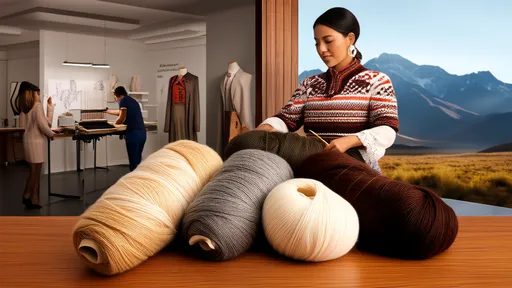
In the high-altitude villages of the Peruvian Andes, where the air is thin and the winds bite, a centuries-old tradition is quietly fueling a modern luxury revolution. The story of alpaca fiber—once the hidden treasure of indigenous weavers—has become an unlikely protagonist in the boardrooms of LVMH, the world’s largest luxury conglomerate. This is not merely a tale of supply chains and profit margins; it’s a narrative woven with cultural resilience, ecological ingenuity, and the quiet power of softness.
Travel

Global Sample of Chinese Blue and White Porcelain: Color Politics from the Yuan Dynasty to Lisbon

By /Jun 10, 2025

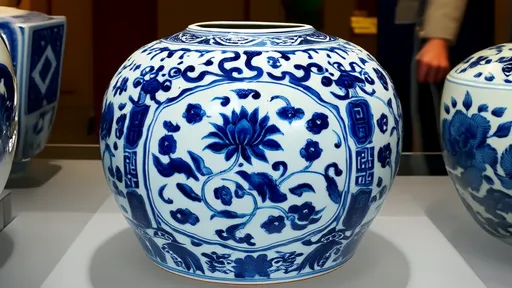
The cobalt-blue brushstrokes that adorned 14th-century Yuan Dynasty porcelain now seem to whisper across continents and centuries. What began as an artistic experiment in Jingdezhen kilns became a chromatic revolution that redefined global aesthetics, power dynamics, and cross-cultural exchange. The journey of Chinese blue-and-white porcelain from the workshops of imperial China to the palaces of Renaissance Europe reveals an extraordinary narrative of color politics, technological espionage, and the birth of the first truly global commodity.
Travel

The Mathematical Code of Persian Carpet: The Cosmological View in the Geometric Patterns of the Isfahan School

By /Jun 10, 2025

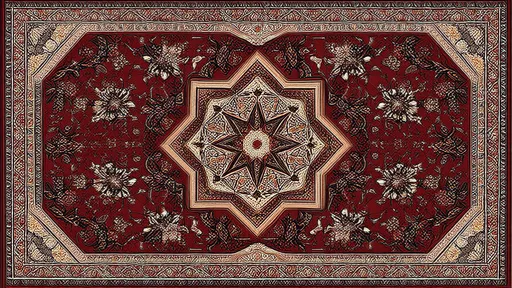
In the labyrinthine alleys of Isfahan's Grand Bazaar, where the scent of saffron mingles with the whisper of silk, Persian carpet weavers have been encoding cosmic truths into wool and dye for centuries. The geometric patterns adorning Isfahan school masterpieces—often dismissed as mere decoration—conceal a sophisticated mathematical language that bridges medieval Islamic cosmology with cutting-edge mathematics. Recent interdisciplinary studies reveal how these intricate designs function as fractal equations, articulating philosophical concepts about infinity long before Western mathematicians formalized such ideas.
Travel

The Transformation of Craftsmen in Venice's Glass Island: Murano Family's Centennial Strategy for Coping with Chinese Manufacturing

By /Jun 10, 2025

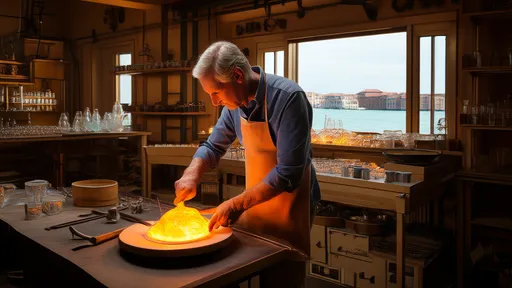
On the Venetian island of Murano, where glassmaking has been a centuries-old tradition, the descendants of master artisans are facing an unprecedented challenge. The rise of Chinese manufacturing has disrupted global markets, flooding them with inexpensive glass products that threaten the survival of Murano's delicate artisanal economy. For generations, families like the Morettis and the Baroviers have passed down secret techniques, but now they must adapt or risk fading into obscurity.
Travel

Dubai’s Camel Racing Revolution: Tradition Collides with AI Ethics

By /Jun 10, 2025

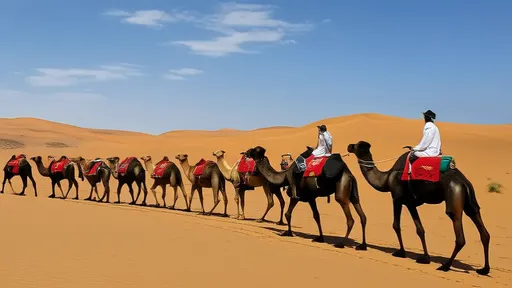
The sun rises over the golden dunes of Dubai, casting long shadows across the Al Marmoom racetrack. For centuries, camel racing has been a cornerstone of Bedouin culture, a sport steeped in tradition and pride. But in recent years, a quiet revolution has taken hold—one driven not by human hands, but by robotics and artificial intelligence. The once-familiar sight of child jockeys has been replaced by tiny, whirring machines strapped to the camels’ backs. While this shift has brought undeniable advancements in safety and efficiency, it has also sparked a heated debate over ethics, tradition, and the role of technology in shaping the future of this ancient sport.
Travel

Amazon Tribe's Drone Protest: How Indigenous Peoples Use Technology to Defend Rainforest Sovereignty

By /Jun 10, 2025

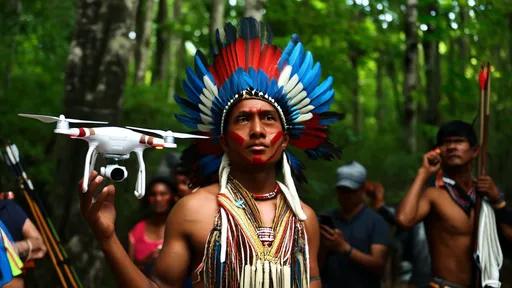
Deep in the heart of the Amazon rainforest, where the emerald canopy stretches endlessly and rivers carve ancient paths through the land, a quiet revolution is unfolding. Indigenous tribes, long portrayed as disconnected from modernity, are now harnessing cutting-edge technology to defend their ancestral territories. Drones buzz overhead, capturing footage of illegal logging and land invasions, while smartphones document environmental crimes in real-time. This is not a scene from a dystopian novel—it’s the new frontline of Indigenous resistance.
Travel

The Disappearance History of the Himalayan Salt Merchant Trail: When Rock Salt Trade Meets Global Supply Chain

By /Jun 10, 2025

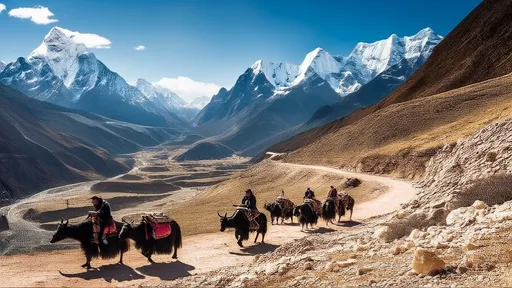
The ancient Himalayan salt trade routes, once pulsating with caravans carrying pink gold to distant kingdoms, now whisper only in the fragmented memories of mountain elders. These high-altitude trails—where yak hooves carved paths through vertiginous cliffs and Buddhist prayer flags fluttered above salt-laden porters—have surrendered to the relentless march of globalized supply chains. What was once a sacred commodity traded for Tibetan turquoise and Nepalese musk now sits commodified on supermarket shelves, its mystical aura diluted by industrial extraction and container ships.
Travel

The Renaissance Movement of the Nile Flood Festival: Modern Egyptians' Worship of Hydrology and Climate Change Response

By /Jun 10, 2025

The Nile River, the lifeblood of Egypt for millennia, has long been a source of both sustenance and spiritual significance. In recent years, a movement to revive the ancient Festival of the Nile Inundation has gained momentum among modern Egyptians. This resurgence is not merely a nostalgic nod to the past but a complex interplay of cultural identity, environmental awareness, and a pragmatic response to the growing threats posed by climate change.
Travel

The Icelandic Volcanic Hot Springs Paradox: How Geothermal Energy Reshaps Nordic Welfare Society

By /Jun 10, 2025

The steaming geothermal lagoons of Iceland have long captivated travelers, but beneath their ethereal beauty lies an unexpected economic paradox. While most nations associate energy independence with geopolitical leverage or industrial might, Iceland’s volcanic abundance has quietly rewired the very fabric of its welfare state. This remote island, where glaciers coexist with erupting fissures, demonstrates how renewable energy can transcend environmental benefits to become the bedrock of social equity.
Travel

The Ancient Craft of Moroccan Tanneries: Camel Urine’s Ecological Wisdom in Tanning Techniques

By /Jun 10, 2025

In the labyrinthine alleys of Fez, Morocco, the air carries a pungent yet strangely familiar scent—a blend of animal hides, natural dyes, and an unexpected ingredient: camel urine. For over a thousand years, the tanneries of Fez have practiced a leather-making tradition that is as much about sustainability as it is about craftsmanship. This ancient method, passed down through generations, reveals an ecological wisdom that modern industries are only beginning to appreciate.
Travel

The 'Jian' Aesthetics of Japanese Noh Opera Masks: Dynamic Solidification Art from the Perspective of Zen Thought

By /Jun 10, 2025

The enigmatic beauty of Japanese Noh theater masks lies not merely in their carved wooden surfaces, but in the profound philosophical interplay between movement and stillness. These masks, known as omote, embody what scholars call the aesthetics of ma (間)—a concept deeply rooted in Zen Buddhism that explores the charged emptiness between forms. To witness a Noh performance is to observe how a static object breathes life into a dynamic art form, creating a paradoxical tension where time itself seems to suspend.
Travel

The Cosmological View of Mexican Day of the Dead: A Life and Death Dialogue between Aztec Calendar and Catholic Culture

By /Jun 10, 2025

The Mexican Day of the Dead, or Día de los Muertos, is a vibrant and profound celebration that transcends mere festivity. At its core lies a rich cosmological dialogue between the ancient Aztec understanding of life and death and the Catholic traditions brought by Spanish colonizers. This unique fusion has given birth to a ritual that is both deeply spiritual and joyously communal, reflecting a worldview where the boundaries between the living and the dead blur, if only for a brief moment each year.