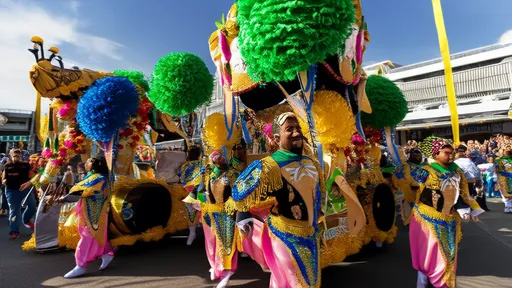
The streets of Rio de Janeiro erupt in a riot of color and sound every February as the city’s legendary Carnival takes center stage. At the heart of this spectacle are the samba schools, the cultural engines that transform the city’s most marginalized neighborhoods into vibrant hubs of creativity and economic opportunity. Behind the glittering costumes and towering floats lies a lesser-known story: how Carnival has become a lifeline for Rio’s favelas, turning poverty into pride and struggle into spectacle.
For decades, the favelas of Rio have been synonymous with violence, drug trafficking, and systemic neglect. Yet, within these communities, the samba schools have emerged as unlikely agents of change. These organizations—part cultural institutions, part social enterprises—have harnessed the economic potential of Carnival to provide jobs, foster talent, and inject millions into the local economy. The result is a delicate ecosystem where art and survival intertwine.
The samba schools are far more than parade performers; they are micro-economies. A single top-tier school can employ thousands during Carnival season—carpenters building floats, seamstresses stitching sequins onto costumes, electricians wiring elaborate light displays. Many of these workers come from the very favelas where the schools are based, creating a circular economy that keeps money within the community. "Before Carnival, I was nobody," says Maria da Silva, a single mother from the Mangueira favela who now leads a team of costume designers. "Now, my hands put food on the table and my son sees me as someone who makes beauty."
The financial scale is staggering. A single parade float can cost upwards of $200,000, with top schools spending millions on their annual presentations. This money doesn’t vanish into corporate coffers—it flows to local artisans, vendors, and laborers. Even the feathers adorning dancers’ headdresses trace back to small businesses in the North Zone of Rio, where entire families specialize in plumage craftsmanship. The economic ripple effects extend year-round, with samba schools operating community centers, music programs, and vocational training when Carnival ends.
But this economy exists in constant tension. While the schools generate wealth, they also depend on the very poverty they help alleviate. The most dazzling costumes are often hand-sewn by favela residents working for minimal wages, and the grueling parade preparations exploit the same cheap labor that Carnival profits uplift. "We are caught between empowerment and exploitation," admits Carlos Albuquerque, a veteran parade coordinator in the Salgueiro samba school. "The schools give opportunities, but they also know people are desperate for work."
The international spotlight brings another layer of complexity. As Carnival’s global popularity grows, so does corporate sponsorship. Beer brands and tech companies now bankroll major samba schools, their logos discreetly woven into float designs. While this influx of capital allows for grander spectacles, some fear the soul of the tradition is being commodified. "The favela used to be the author of its own story," reflects sociologist Luiza Mendes. "Now there’s a risk we become just colorful background for multinational marketing."
Yet for all its contradictions, the Carnival economy remains a rare bright spot in Rio’s fractured social landscape. In a city where favela youth often see drug gangs as the only path to financial stability, the samba schools offer an alternative—one where rhythm and resourcefulness can trump violence. As the sun rises over the Sambadrome after another all-night parade, the exhausted dancers and stagehands may barely stand, but they stand together. And in the favelas, that solidarity counts as currency no bank can measure.
By /Jun 10, 2025

By /Jun 10, 2025

By /Jun 10, 2025
By /Jun 10, 2025
By /Jun 10, 2025
By /Jun 10, 2025
By /Jun 10, 2025
By /Jun 10, 2025
By /Jun 10, 2025
By /Jun 10, 2025
By /Jun 10, 2025
By /Jun 10, 2025
By /Jun 10, 2025
By /Jun 10, 2025
By /Jun 10, 2025
By /Jun 10, 2025

By /Jun 10, 2025
By /Jun 10, 2025

By /Jun 10, 2025

By /Jun 10, 2025