The recent buzz surrounding room-temperature superconductivity has sent shockwaves through the scientific community and industries alike. While still in the experimental stage, the mere possibility of achieving superconductivity without extreme cooling has sparked intense speculation about its potential to render entire sectors obsolete. The implications are profound, touching everything from energy infrastructure to transportation systems.
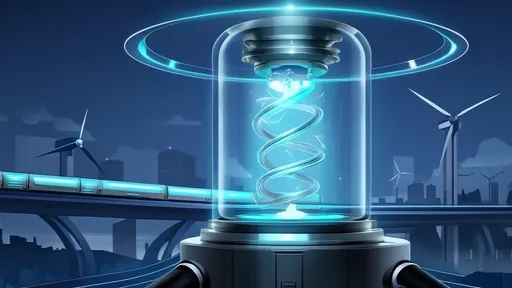
Power transmission and distribution stands as one of the most vulnerable industries should room-temperature superconductors become commercially viable. Traditional copper wiring, with its inherent resistance and energy losses, would become instantly antiquated. The electrical grid as we know it - with its substations, transformers, and complex voltage regulation systems - would require complete overhaul. Superconducting cables could transmit electricity over vast distances with near-perfect efficiency, eliminating the need for much of today's power infrastructure.
The cooling technology sector faces existential threats from this breakthrough. Current superconductors require expensive cryogenic systems to maintain temperatures near absolute zero. Companies specializing in liquid helium production, cryogenic refrigeration, and related cooling equipment would see their markets evaporate overnight. Even conventional air conditioning and refrigeration might face disruption as superconducting alternatives emerge for certain applications.
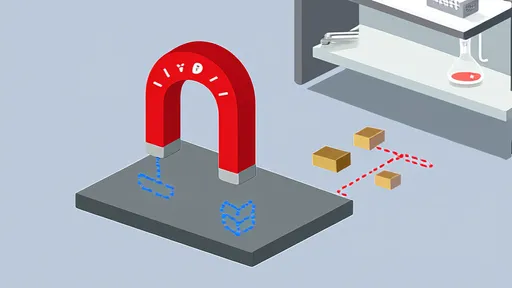
Transportation industries would experience radical transformation. Maglev train manufacturers currently rely on complex cooling systems for their superconducting electromagnets. Room-temperature variants would make existing systems obsolete while dramatically lowering the cost of magnetic levitation technology. This could spell trouble for traditional rail manufacturers as maglev becomes economically viable for widespread deployment. Even conventional electric vehicle makers might face challenges as superconducting motors and batteries potentially offer superior performance.
The energy storage industry would undergo massive disruption. Superconducting magnetic energy storage (SMES) systems, currently limited by cooling requirements, could become practical for grid-scale applications. This might reduce demand for lithium-ion batteries and other chemical storage solutions in certain contexts. Pumped hydro storage facilities, with their geographic limitations and environmental impacts, could face competition from compact superconducting alternatives.
Medical imaging represents another sector facing potential upheaval. MRI machine manufacturers have built entire businesses around liquid helium-cooled superconducting magnets. While the transition might take time due to regulatory hurdles, room-temperature superconductors could dramatically reduce costs and complexity in medical imaging. This could pressure established players while enabling new competitors to enter the market with simpler, cheaper systems.
The electronics industry might witness the most profound changes of all. Superconducting processors could theoretically operate without heat dissipation issues, potentially making silicon-based chips obsolete. This could upend the entire semiconductor supply chain, from fabrication plants to component manufacturers. Even basic electronic components like resistors and capacitors might need reimagining in a world where electrical resistance becomes optional rather than inherent.
Traditional electric motor and generator manufacturers would face intense pressure to adapt or perish. Superconducting versions could achieve unprecedented efficiency and power density, making conventional designs noncompetitive in many applications. This would impact everything from industrial machinery to household appliances, forcing complete redesigns of electromechanical systems across multiple industries.
The metals mining sector would experience significant shifts. Reduced demand for copper in electrical applications could depress prices and alter global mining economics. Conversely, demand for materials used in superconducting compounds might skyrocket, creating new mining opportunities while potentially displacing existing ones. The geopolitical implications of such shifts could be substantial, affecting resource-dependent economies worldwide.
While the full implications remain speculative until room-temperature superconductors prove commercially viable, the potential for industry disruption is undeniable. What appears certain is that such a breakthrough would not simply improve existing technologies - it would require complete rethinking of fundamental infrastructure across multiple sectors. The creative destruction unleashed could make entire industries disappear while giving birth to new ones we can scarcely imagine today.
By /Jun 7, 2025

By /Jun 7, 2025

By /Jun 7, 2025

By /Jun 7, 2025

By /Jun 7, 2025

By /Jun 7, 2025

By /Jun 7, 2025

By /Jun 7, 2025
By /Jun 7, 2025

By /Jun 7, 2025

By /Jun 7, 2025

By /Jun 7, 2025

By /Jun 7, 2025

By /Jun 7, 2025
By /Jun 7, 2025
By /Jun 7, 2025

By /Jun 7, 2025

By /Jun 7, 2025

By /Jun 7, 2025

By /Jun 7, 2025