Elon Musk's Neuralink has sparked intense debate with its ambitious goal of merging human brains with artificial intelligence. The company's brain-computer interface (BCI) technology, often referred to as a "brain chip," promises to revolutionize medicine, enhance cognitive abilities, and even create what some speculate could be the next stage of human evolution—superhumans. But how realistic is this vision, and what are the ethical and scientific hurdles standing in the way?
The Promise of Neuralink: Beyond Medical Applications
At its core, Neuralink aims to address severe neurological conditions such as Parkinson's disease, paralysis, and spinal cord injuries. By implanting ultra-thin electrodes into the brain, the device could restore lost functions, allowing patients to control prosthetic limbs or communicate through thought alone. Early trials have shown promise, with quadriplegic participants successfully operating computers using only their minds.
However, Musk's vision extends far beyond therapeutic uses. He envisions a future where Neuralink enhances memory, accelerates learning, and enables direct brain-to-brain communication. In theory, this could lead to humans with vastly superior cognitive abilities—individuals capable of processing information at machine-like speeds or accessing vast databases of knowledge instantaneously. Such capabilities would blur the line between human and machine, raising the question: Could this technology create "superhumans"?
The Science Behind the Hype
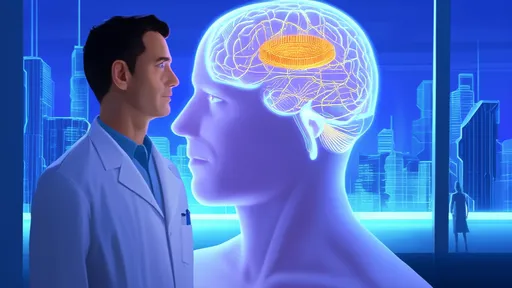
Neuralink's technology relies on decoding neural signals and translating them into digital commands. The current iteration involves a coin-sized chip implanted in the skull, connected to threads thinner than a human hair that interface with neurons. While impressive, the brain's complexity presents monumental challenges. Scientists still don’t fully understand how neural networks encode thoughts, emotions, or consciousness.
Even if Neuralink perfects signal decoding, enhancing human cognition would require not just reading but also writing information into the brain. This level of bidirectional communication remains speculative. Some researchers argue that without a comprehensive map of the brain's wiring, true cognitive augmentation is decades away. Others caution that tampering with neural circuits could have unintended consequences, such as personality changes or loss of autonomy.
Ethical and Societal Implications
The prospect of "superhumans" raises profound ethical dilemmas. Would enhanced individuals gain unfair advantages in education, careers, or social status? Could this deepen existing inequalities, creating a divide between those who can afford augmentation and those who cannot? Governments and regulatory bodies are already grappling with these questions, but the pace of technological advancement may outstrip their ability to respond.
Privacy is another critical concern. A device that reads thoughts could expose users' most intimate mental experiences to hacking or surveillance. Neuralink insists on robust encryption, but no system is entirely foolproof. The idea of corporations or governments potentially accessing or manipulating human thoughts is a dystopian scenario that cannot be ignored.
The Road Ahead: Hype vs. Reality
While Musk’s vision is undeniably compelling, experts urge caution. The leap from treating paralysis to creating superhuman cognition is enormous, and many of Neuralink’s claims remain untested. The brain is not a computer; it’s an organic, dynamic system shaped by evolution over millions of years. Replicating or enhancing its functions is not as simple as upgrading software.
That said, dismissing Neuralink entirely would be shortsighted. Even incremental advancements in BCI technology could transform lives, particularly for people with disabilities. The key lies in balancing optimism with rigorous science, ensuring that ethical considerations keep pace with innovation. Whether or not Neuralink creates "superhumans," its journey will undoubtedly reshape our understanding of the human mind and its potential.
Conclusion: A Future in Flux
Elon Musk’s Neuralink sits at the intersection of groundbreaking science and speculative futurism. While the idea of brain chips creating superhumans captures the imagination, the reality is far more nuanced. The technology holds immense promise, but its ultimate impact will depend on how society navigates the scientific, ethical, and philosophical challenges it presents. One thing is certain: the conversation about the future of human cognition has only just begun.
By /Jun 7, 2025

By /Jun 7, 2025

By /Jun 7, 2025

By /Jun 7, 2025
By /Jun 7, 2025

By /Jun 7, 2025
By /Jun 7, 2025

By /Jun 7, 2025

By /Jun 7, 2025
By /Jun 7, 2025
By /Jun 7, 2025

By /Jun 7, 2025
By /Jun 7, 2025

By /Jun 7, 2025
By /Jun 7, 2025
By /Jun 7, 2025
By /Jun 7, 2025

By /Jun 7, 2025
By /Jun 7, 2025
By /Jun 7, 2025