Nuclear Fusion Power Countdown: Update on China's Artificial Sun" Progress

Jun 7, 2025 By

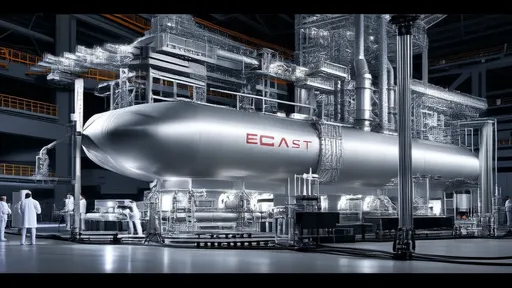
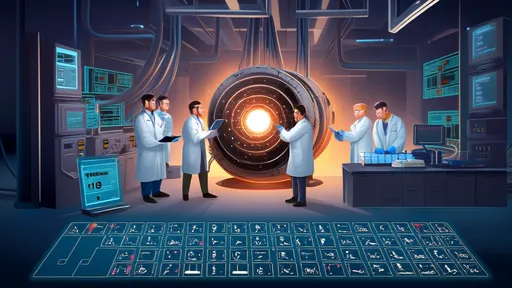
The global race to harness nuclear fusion power has entered a critical phase, with China's Experimental Advanced Superconducting Tokamak (EAST) making groundbreaking strides that could potentially rewrite humanity's energy future. Dubbed the "artificial sun," this cutting-edge fusion reactor in Hefei has recently achieved several world-record milestones that bring commercial fusion power tantalizingly closer to reality.

China's EAST reactor, operated by the Institute of Plasma Physics under the Chinese Academy of Sciences, has become the focal point of international attention after sustaining plasma temperatures of 120 million degrees Celsius for 101 seconds in 2021 - a duration nearly five times longer than its previous record. Even more remarkably, the device briefly achieved a staggering 160 million degrees Celsius, demonstrating unprecedented control over the extreme conditions needed for fusion.

These achievements represent more than just technical benchmarks. They provide crucial validation for the tokamak design that will be used in the International Thermonuclear Experimental Reactor (ITER) project in France, where China plays a leading role among 35 participating nations. The EAST serves as an important testbed for technologies that could eventually power the world's first commercial fusion plants.

What makes China's progress particularly significant is how rapidly the country has advanced in this notoriously difficult field. When EAST first became operational in 2006, it could only maintain fusion conditions for a few seconds. The leap to maintaining 100-million-degree plasma for minutes rather than seconds marks a fundamental shift in what's considered technically possible with current materials and magnetic confinement technology.

The engineering challenges involved in these experiments cannot be overstated. Containing plasma hotter than the core of the sun requires incredibly precise magnetic fields generated by superconducting coils cooled to near absolute zero. The reactor's inner walls must withstand not only extreme heat but also intense neutron bombardment - a byproduct of the fusion process that gradually degrades materials.

Chinese scientists have made several key breakthroughs to overcome these obstacles. Their development of advanced tungsten divertors - components that remove heat and impurities from the plasma - has proven particularly valuable. The EAST team has also pioneered new plasma shaping and control techniques that maintain stability at previously unattainable durations.

Looking ahead, researchers are working toward the next major milestone: sustaining fusion conditions for 1,000 seconds (nearly 17 minutes) at operational temperatures. Achieving this would demonstrate that continuous fusion power generation is physically possible with current technology, though significant engineering hurdles remain before such systems could operate commercially.

The implications of successful fusion power cannot be overstated. Unlike fission reactors, fusion produces no long-lived radioactive waste. The primary fuel - isotopes of hydrogen extracted from water and lithium - is virtually inexhaustible. A single gram of fusion fuel can theoretically produce as much energy as eight tons of oil, without carbon emissions.

China's fusion program operates as part of a broader national energy strategy that includes massive investments in renewables, next-generation fission reactors, and now fusion research. The country has committed to building a Fusion Engineering Test Reactor (CFETR) by 2030, intended to bridge the gap between experimental devices like EAST and commercial power plants.

International collaboration remains a cornerstone of fusion research despite geopolitical tensions. Chinese researchers regularly share findings with ITER partners, and many consider the EAST project complementary to other major fusion experiments like Europe's JET or America's SPARC reactor. This spirit of cooperation stems from recognition that fusion energy would benefit all humanity if successfully developed.

Still, significant challenges persist before fusion can contribute to power grids. The energy return ratio - the amount of power generated versus input - must improve dramatically. While recent experiments have come closer to break-even, no fusion device has yet produced more energy than it consumes when accounting for all system inputs.

Materials science presents another major hurdle. The neutron flux from sustained fusion reactions would quickly degrade conventional materials, requiring the development of new alloys or composites that can survive decades in a commercial reactor environment. China's materials research laboratories are working on several promising solutions, including nano-structured metals and liquid lithium shielding.

Economic factors also loom large. Even optimistic projections suggest fusion power won't become cost-competitive with renewables until at least 2050. However, as Song Yuntao, deputy director of the EAST project, notes: "We're not developing fusion as a replacement for solar or wind, but as a baseload complement that can provide continuous clean energy regardless of weather conditions or time of day."

The psychological impact of China's fusion progress shouldn't be underestimated either. Each broken record generates excitement in the scientific community and helps maintain funding for what remains a high-risk, high-reward endeavor. After decades of fusion always being "30 years away," many researchers now believe commercial viability could be achieved within our lifetimes.

As the EAST team prepares for their next round of experiments, the world watches closely. Their success or failure could determine whether fusion remains confined to laboratories or finally emerges as the holy grail of clean energy production. One thing is certain: China has firmly established itself as a leader in what may become the most important technological achievement of the 21st century.
Recommend Posts
Science

If Room-Temperature Superconductivity Becomes a Reality, Which Industries Will Disappear?

By /Jun 7, 2025

The recent buzz surrounding room-temperature superconductivity has sent shockwaves through the scientific community and industries alike. While still in the experimental stage, the mere possibility of achieving superconductivity without extreme cooling has sparked intense speculation about its potential to render entire sectors obsolete. The implications are profound, touching everything from energy infrastructure to transportation systems.
Science

3D Printed Human Organs: Tracking the Status of the First Transplant Recipients

By /Jun 7, 2025

Five years after the world’s first successful transplant of a 3D-printed human organ, the medical community is holding its breath. What began as a daring experiment has evolved into a quiet revolution, with the initial cohort of patients serving as unwitting pioneers in what may become medicine’s most consequential breakthrough since antibiotics.
Science

Vertical Agricultural Revolution: Growing A Thousand Acres in Skyscrapers

By /Jun 7, 2025

In the heart of urban landscapes, where concrete jungles dominate, a quiet revolution is taking root. Vertical farming, once a futuristic concept, is now reshaping how we think about agriculture. By stacking crops in towering skyscrapers, innovators are proving that food can be grown efficiently without sprawling fields. This isn’t just a niche experiment—it’s a scalable solution to feed growing cities while conserving land and resources.
Science

Quantum Computers Threaten Bitcoin? Cryptocurrency Doomsday Countdown

By /Jun 7, 2025

The rise of quantum computing has sent ripples through the technological world, promising breakthroughs in fields ranging from medicine to artificial intelligence. However, for the cryptocurrency community, this emerging technology carries a darker implication—the potential to unravel the very fabric of blockchain security. Bitcoin, the flagship of decentralized digital currencies, faces an existential threat if quantum computers reach sufficient maturity. The encryption that safeguards Bitcoin transactions, once considered unbreakable, may crumble under the sheer computational power of quantum machines.
Science

Will Musk's Brain-Computer Interface Create Superhumans"?

By /Jun 7, 2025

Elon Musk's Neuralink has sparked intense debate with its ambitious goal of merging human brains with artificial intelligence. The company's brain-computer interface (BCI) technology, often referred to as a "brain chip," promises to revolutionize medicine, enhance cognitive abilities, and even create what some speculate could be the next stage of human evolution—superhumans. But how realistic is this vision, and what are the ethical and scientific hurdles standing in the way?
Science

Space Elevator: How Far Is Science Fiction from Reality?

By /Jun 7, 2025

The concept of a space elevator, once relegated to the realm of science fiction, has steadily inched toward the fringes of scientific plausibility. For decades, the idea of a towering structure connecting Earth to space has captivated imaginations, offering a vision of cheap, efficient access to orbit. But how close are we to turning this fantastical notion into reality? The answer lies at the intersection of material science, engineering audacity, and economic feasibility.
Science

AI Diagnoses Cancer with Higher Accuracy than Doctors? Real-Test Report from a Tertiary Hospital

By /Jun 7, 2025

The rapid advancement of artificial intelligence (AI) in healthcare has sparked both excitement and skepticism. One of the most debated topics is whether AI can outperform human doctors in diagnosing cancer. A recent study conducted at a top-tier Chinese hospital has added fuel to this discussion, suggesting that AI might indeed have the upper hand in certain scenarios.
Science

Where are the Ethical Boundaries Five Years After the Gene-Edited Babies Incident?"

By /Jun 7, 2025

Five years have passed since the world first learned of the birth of the gene-edited babies in China, a scientific breakthrough—or transgression—that sent shockwaves through the global community. The experiment, led by He Jiankui, claimed to have altered the embryos of twin girls to make them resistant to HIV. The revelation ignited fierce debates about the ethical boundaries of genetic engineering, the responsibilities of scientists, and the societal implications of manipulating human DNA. Today, as science advances at an unprecedented pace, the question lingers: Where do we draw the line?
Science

Nuclear Fusion Power Countdown: Update on China's Artificial Sun" Progress

By /Jun 7, 2025

The global race to harness nuclear fusion power has entered a critical phase, with China's Experimental Advanced Superconducting Tokamak (EAST) making groundbreaking strides that could potentially rewrite humanity's energy future. Dubbed the "artificial sun," this cutting-edge fusion reactor in Hefei has recently achieved several world-record milestones that bring commercial fusion power tantalizingly closer to reality.
Science

New Breakthrough in Brain-Computer Interfaces: Typing with Thoughts Becomes Reality!

By /Jun 7, 2025

For decades, the idea of typing with your mind seemed like science fiction. But recent advancements in brain-computer interface (BCI) technology have turned this futuristic dream into reality. Researchers and engineers have achieved a monumental leap, allowing individuals to convert their thoughts into text with unprecedented accuracy and speed. This breakthrough promises to revolutionize communication for people with disabilities and could eventually change how all of us interact with technology.
Science

Why is ice slippery? A century-old puzzle is finally solved.

By /Jun 7, 2025

For over a century, the question of why ice is slippery has puzzled scientists and curious minds alike. The seemingly simple phenomenon has eluded a definitive explanation until recent breakthroughs in molecular research finally cracked the mystery wide open. This discovery not only satisfies a long-standing scientific curiosity but also has profound implications for fields ranging from materials science to climate studies.
Science

Supercritical Water: The Deadly Liquid" That Can Dissolve Petroleum

By /Jun 7, 2025

In the depths of the ocean, where crushing pressures and scorching temperatures defy conventional physics, lies one of nature’s most enigmatic substances: supercritical water. This bizarre fluid, neither fully liquid nor entirely gas, possesses properties so extreme that scientists have dubbed it the "death liquid"—a substance capable of dissolving organic matter, even crude oil, with terrifying efficiency. Its discovery has rewritten textbooks, challenged industrial norms, and opened doors to revolutionary applications—from cleaning oil spills to breaking down toxic waste. Yet, for all its potential, supercritical water remains shrouded in mystery, a reminder of how little we understand about the extremes of our own planet.
Science

Does Cell Phone Radiation Cause Cancer? A Decade-Long Tracking Report from the World Health Organization"

By /Jun 7, 2025

The relationship between mobile phone radiation and cancer has been a topic of intense debate for decades. As smartphones became ubiquitous, concerns about their potential health risks grew, particularly regarding radiofrequency electromagnetic fields (RF-EMF) emitted by these devices. The World Health Organization (WHO) embarked on a decade-long study to investigate whether prolonged exposure to mobile phone radiation could indeed lead to cancer. The findings of this comprehensive research have significant implications for public health policies and individual usage habits.
Science

The Complex Chemistry of Candle Burning: A Nanofactory Hidden in the Flame?

By /Jun 7, 2025

The humble candle flame, a companion to humankind for centuries, holds secrets far more complex than its flickering light suggests. What appears as simple combustion to the naked eye is in fact a sophisticated chemical reactor operating at the nanoscale - a veritable factory producing molecules we're only beginning to understand.
Science

The Ultimate Battle of the Periodic Table: The Race for Element 119

By /Jun 7, 2025

The race to synthesize element 119, the next frontier in the periodic table, has ignited a fierce competition among the world's leading nuclear research laboratories. As scientists push the boundaries of atomic physics, this elusive superheavy element represents not just a scientific milestone but also a matter of national prestige. The stakes are high, and the challenges are monumental, requiring unprecedented technological innovation and international collaboration.
Science

Why do fridge magnets only attract iron and not copper?

By /Jun 7, 2025

The humble refrigerator magnet is a staple in households around the world, clinging steadfastly to metal surfaces while utterly ignoring others. Yet, have you ever wondered why these colorful little objects seem to have a preference for iron or steel but show no interest in copper or aluminum? The answer lies in the fascinating interplay between magnetism and the atomic structure of materials.
Science

The Scientific Principle of Invisibility Cloaks: How Light is Bent"

By /Jun 7, 2025

The concept of an invisibility cloak, once confined to the realms of fantasy and science fiction, has edged closer to reality thanks to groundbreaking advancements in optics and materials science. At the heart of this innovation lies the ability to manipulate light—bending it in ways that defy conventional physics. But how exactly does light "bend" around an object to render it invisible? The answer lies in the intricate dance between electromagnetic waves and engineered materials that challenge our understanding of visibility.
Science

Can seafood still be consumed after nuclear wastewater is released into the sea?

By /Jun 7, 2025

The release of treated nuclear wastewater into the ocean has sparked global debate, particularly concerning the safety of consuming seafood. As nations grapple with the environmental and health implications, consumers are left wondering whether their favorite seafood dishes are still safe to eat. The answer is not straightforward, as it depends on multiple factors, including the treatment process of the wastewater, the dilution effect of the ocean, and the regulatory standards in place.
Science

Room-Temperature Superconductivity: Is This Time for Real?

By /Jun 7, 2025

The scientific community is abuzz yet again with claims of room-temperature superconductivity, a breakthrough that has been tantalizing researchers for decades. This time, the spotlight is on a team of researchers who have published preliminary results suggesting they’ve achieved superconductivity at ambient conditions. But given the history of retractions, controversies, and unmet promises in this field, skepticism runs high. How much of this latest claim should we believe, and what does it mean for the future of energy, technology, and materials science?
Science

Quantum Entanglement for Information Transfer? The Surprising Truth Behind the Misunderstanding

By /Jun 7, 2025

The concept of using quantum entanglement to transmit information has long captured the imagination of scientists and science fiction enthusiasts alike. The idea that particles could be linked across vast distances, instantly influencing one another, seems to promise a revolution in communication. However, the reality is far more nuanced—and often misunderstood.