The scientific community is abuzz yet again with claims of room-temperature superconductivity, a breakthrough that has been tantalizing researchers for decades. This time, the spotlight is on a team of researchers who have published preliminary results suggesting they’ve achieved superconductivity at ambient conditions. But given the history of retractions, controversies, and unmet promises in this field, skepticism runs high. How much of this latest claim should we believe, and what does it mean for the future of energy, technology, and materials science?
The Allure of Room-Temperature Superconductivity
Superconductivity, the phenomenon where a material can conduct electricity with zero resistance, has long been a holy grail of physics. Since its discovery in 1911, scientists have chased materials that exhibit this property at practical temperatures. Traditional superconductors require extreme cooling, often close to absolute zero, making them impractical for widespread use. A room-temperature superconductor would revolutionize power grids, transportation, and electronics, eliminating energy loss and enabling technologies we can barely imagine.
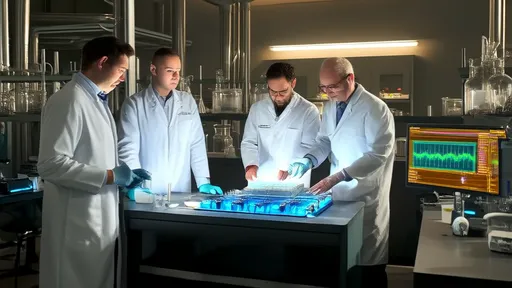
The latest claim comes from a group of researchers who say they’ve observed superconductivity in a modified compound at temperatures as high as 20°C. Their data, shared in a preprint paper, shows a drop in electrical resistance and signs of the Meissner effect, a hallmark of superconductivity. But the paper has yet to undergo peer review, and the team has been cautious, calling for independent verification. This measured tone is a departure from some past announcements, which were often accompanied by hyperbolic headlines and premature excitement.
A History of Hope and Heartbreak
This isn’t the first time researchers have claimed to crack the room-temperature superconductivity puzzle. In 2020, a paper published in Nature described a carbonaceous sulfur hydride compound that exhibited superconductivity at 15°C—but only under extreme pressure, equivalent to that found deep within the Earth. While impressive, the practical applications were limited. Before that, the 1980s saw the rise of high-temperature superconductors, which still required cooling but at less extreme temperatures. Each advance brought hope, but none delivered the dream of ambient-condition superconductivity.
Then there are the controversies. In 2018, a team from India claimed to have created a room-temperature superconductor, only to retract the paper amid criticism and failed replication attempts. Similar stories have played out multiple times over the years, leaving many experts wary of bold claims. The field has become a minefield of hype and disappointment, where extraordinary claims demand extraordinary evidence.
The Skeptics’ Perspective
This time around, the reaction from the scientific community has been a mix of cautious interest and outright skepticism. Some researchers point to inconsistencies in the data or question whether the observed effects might have alternative explanations. Others note that the material in question is complex and poorly understood, making it difficult to rule out experimental artifacts. "I’ll believe it when I see it replicated by three independent labs," quipped one condensed matter physicist, echoing a sentiment shared by many.
Part of the challenge is that superconductivity is notoriously difficult to confirm. It’s not enough to measure zero resistance; researchers must also demonstrate the Meissner effect, where the material expels magnetic fields. Even then, subtle experimental errors or material impurities can lead to false positives. The bar for proof is high, and rightfully so—given the potential implications, the scientific community can’t afford to get it wrong.
What If It’s Real?
Despite the skepticism, the possibility—however slim—that this claim could be genuine is enough to spark excitement. If verified, room-temperature superconductivity would be one of the most transformative discoveries of the century. Power transmission could become nearly lossless, making renewable energy more viable and reducing global carbon emissions. Maglev trains, currently limited by the need for cryogenic cooling, could become commonplace. Medical imaging devices like MRI machines would become cheaper and more accessible.
Beyond these applications, the discovery would open doors to entirely new technologies. Quantum computing, which relies on superconducting qubits, could leap forward. Energy storage solutions, from supercapacitors to batteries, might see unprecedented improvements. The ripple effects would touch nearly every aspect of modern life, reshaping industries and economies in ways we’re only beginning to grasp.
The Path Forward
For now, the scientific process will play out. Other labs will attempt to replicate the results, and the preprint will face rigorous peer review. If the findings hold up, the researchers will need to provide more detailed data and address the community’s questions. If not, this will join the long list of near-misses in the quest for room-temperature superconductivity.
What’s clear is that the pursuit is far from over. Whether this particular claim stands or falls, the dream of a superconductor that works in everyday conditions remains alive. And with each attempt, whether successful or not, scientists learn more about the fundamental physics that could one day make that dream a reality. For now, the best approach is cautious optimism—hope for the best, but demand the evidence.
By /Jun 7, 2025

By /Jun 7, 2025

By /Jun 7, 2025

By /Jun 7, 2025

By /Jun 7, 2025

By /Jun 7, 2025

By /Jun 7, 2025

By /Jun 7, 2025

By /Jun 7, 2025

By /Jun 7, 2025
By /Jun 7, 2025

By /Jun 7, 2025

By /Jun 7, 2025

By /Jun 7, 2025
By /Jun 7, 2025
By /Jun 7, 2025

By /Jun 7, 2025

By /Jun 7, 2025
By /Jun 7, 2025

By /Jun 7, 2025